
What is an ERP System? A Complete Guide for Schools and Businesses in Sri Lanka
 By Menaka Jayasundara•2026-06-12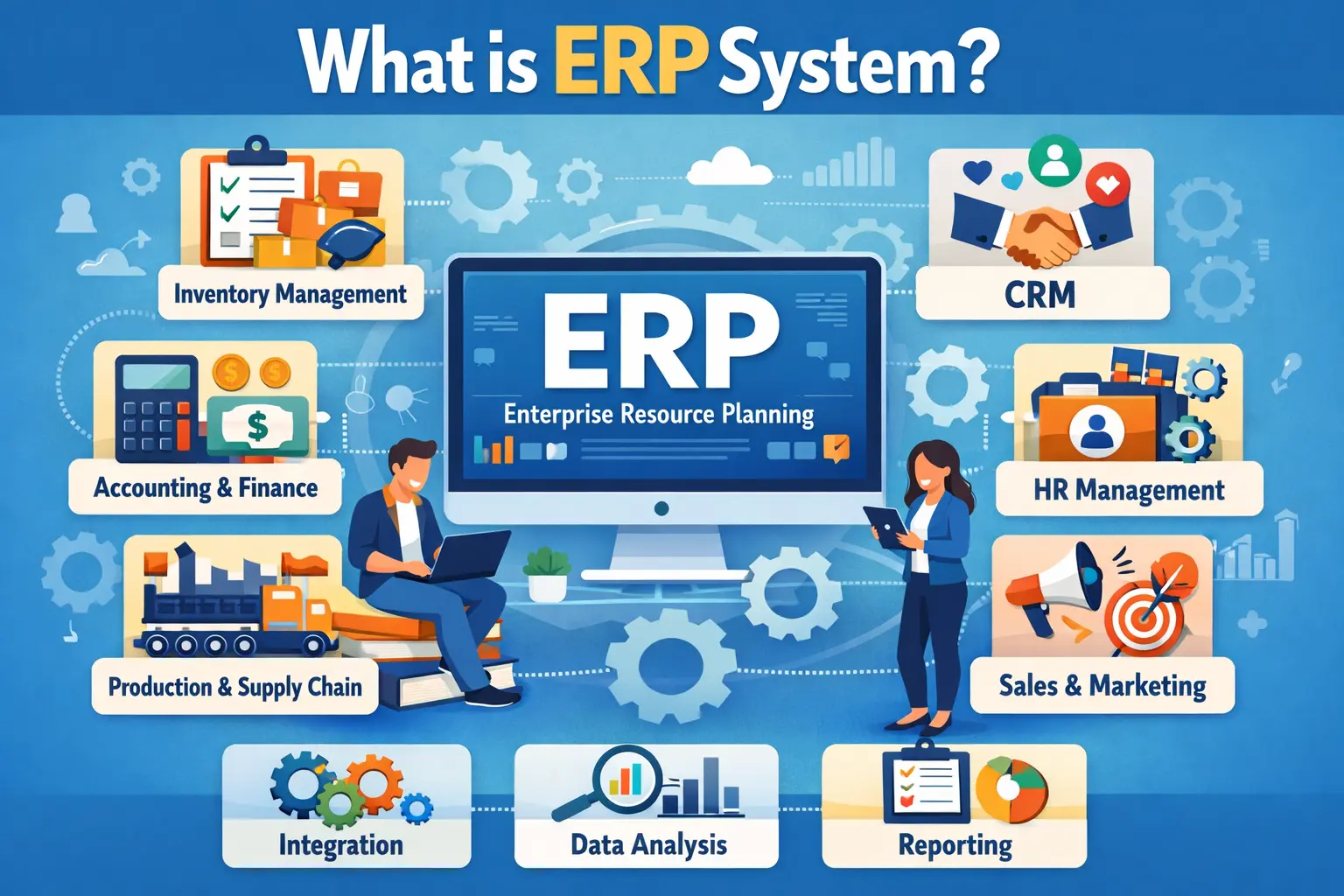
ERP (Enterprise Resource Planning) is a type of software that brings all the core processes of an organisation - finance, human resources, student management, inventory, and more - into a single connected system. Instead of using five different spreadsheets and three separate apps, everything lives in one place.
Why Does It Matter?
Most schools, colleges, and small businesses in Sri Lanka still manage their operations manually - paper fee receipts, Excel mark sheets, WhatsApp for staff communication. This creates errors, delays, and lost data. An ERP eliminates all of that by automating and connecting every process.
Key Modules in a Typical ERP
- Student / Customer Management: Admissions, profiles, attendance, and communication in one dashboard.
- Finance & Fee Management: Automated invoicing, payment tracking, and financial reports.
- HR & Payroll: Staff records, leave management, and salary calculations.
- Timetable & Scheduling: Class scheduling, room allocation, and calendar management.
- Reports & Analytics: Real-time dashboards showing exactly how your organisation is performing.
ERP for Schools vs. Businesses
For schools and colleges, an ERP manages students from admission to graduation - fees, marks, attendance, certificates, and parent communication. For businesses, it focuses on sales, inventory, supplier payments, and staff management. At Sentrue Labs, we build custom ERPs tailored to whichever type of organisation you run.
Cloud-Based vs. On-Premise
Traditional ERPs were installed on a local server - expensive and hard to maintain. Modern cloud-based ERPs (like the ones we build) run in a browser, are accessible from anywhere, and require no server hardware on your premises. This is ideal for Sri Lankan organisations that want enterprise-grade software without enterprise-grade IT costs.
How Long Does It Take to Build?
A basic ERP for a small school or business typically takes 6–12 weeks. A full-featured platform with multiple modules, integrations, and custom workflows can take 3–6 months. We deliver in phases so you start seeing value early.
Is It Worth the Investment?
Absolutely. Organisations that switch from manual systems to a custom ERP typically save 10–20 hours of admin work per week, reduce billing errors by over 90%, and gain real-time visibility into their operations. The ROI is usually recovered within the first year.
If you're ready to explore what a custom ERP could look like for your school or business, get in touch with us - we offer a free consultation.